Student Led Conferencing
Follow the child. They will show you what they need to do, what they need to develop in themselves, and what area they need to be challenged in.
—Maria Montessori
Precisely. As Montessorians, we know this. We live this. Parent teacher conferences, historically, have been a place for parents to listen to their child’s teacher highlight areas in which they excel and areas in which they are challenged. In the early stages of development, guides observe with the intention of gathering each learner’s interests and proclivities in order to guide the learner along the path of building in areas of challenge, and exploring further their areas of great enthusiasm. As a learner moves into adolescence, they become more self aware of this process, and are capable and ready to describe it themselves.
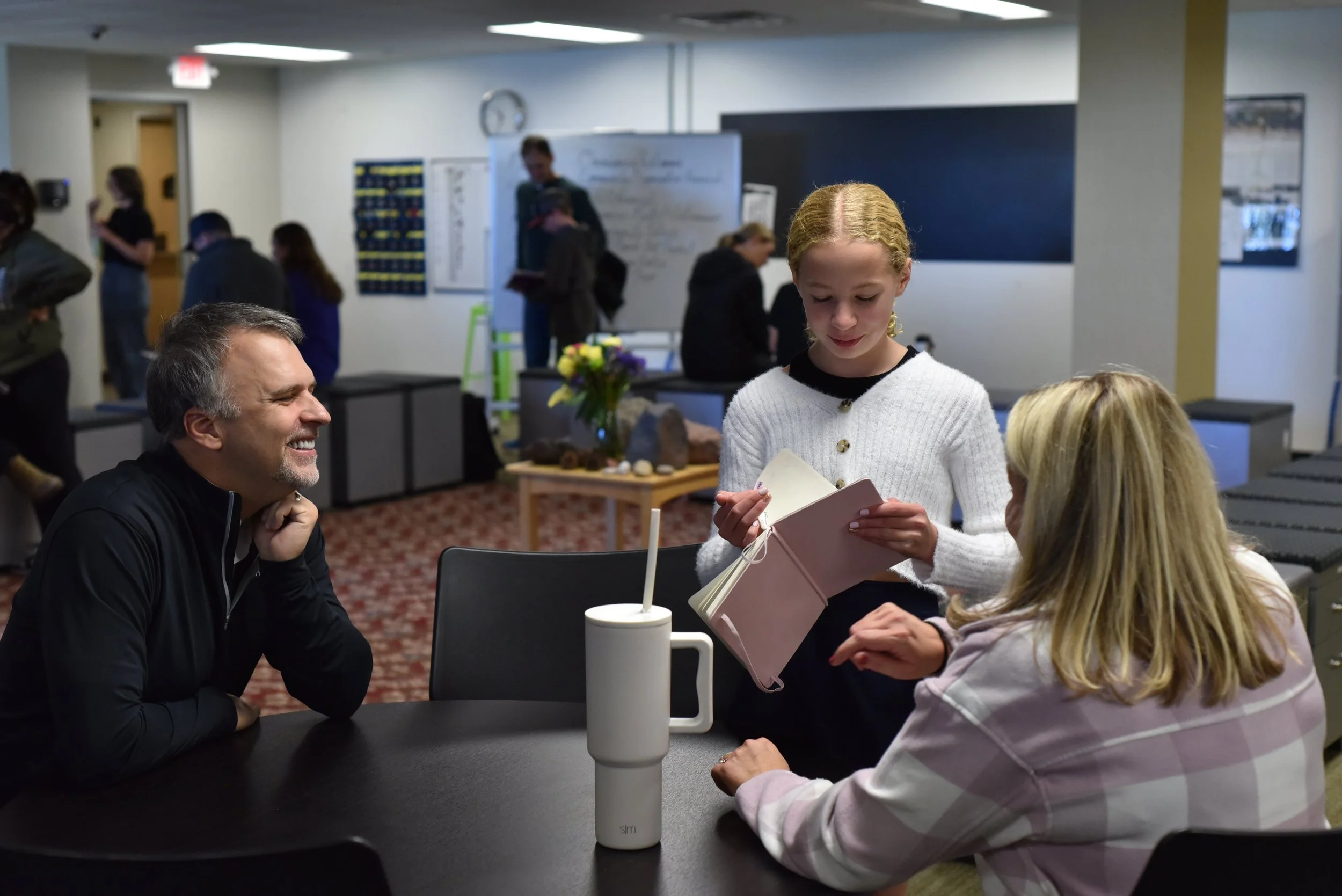
Student led conferencing is a conference, or more aptly, a presentation, created and led by the student for their parents and guides. Students collect samples of their work, including notes, drafts, practice, and published works and organize their collection into a portfolio. The learner then presents their work by explaining what they did, evaluating their effort and performance, reporting what they learned, and more importantly, sharing what they would like to study additionally, as well as future expectations for performance.
The purpose of shifting the act of assessing a student’s learning from the guide to the learner is to recognize that the learning belongs to the learner; it is not a process dictated or coerced by the guide, parent, or other outside force. One’s successes, failures, motivations, and struggles are a personal experience, and therefore are best described, evaluated, and directed by the individual.
The benefits are infinite. Through verbalizing their learning process, students own it. They realize that they are in charge of and responsible for their actions, or inactions. The student, through their presentation, acknowledges how their effort and understanding created their results. Parents and guides are not left wondering why a student excels in math and struggles in writing, or vice versa; the learner explains. As the audience, we learn about what excites them and why, what their dreams are, what their worries are, and get a glimpse of what role they will play in the future. Guides gain insight to each student’s individual understanding and perception of their learning while parents get to see their children as self aware, independent learners. With all of this information, we then can best support each student as they continue to grow academically, socially, and personally.
Instead of leaving traditional junior high conferences exhausted, I leave student led conferences invigorated, and inspired. Invigorated by the love of learning described in twenty-five unique ways, and inspired by the twenty-five new perspectives I have gained looking through the eyes of young adolescent learners.
So, when the time comes for your child to present, be prepared to listen well, engage in their learning as a partner, and celebrate beside them.